

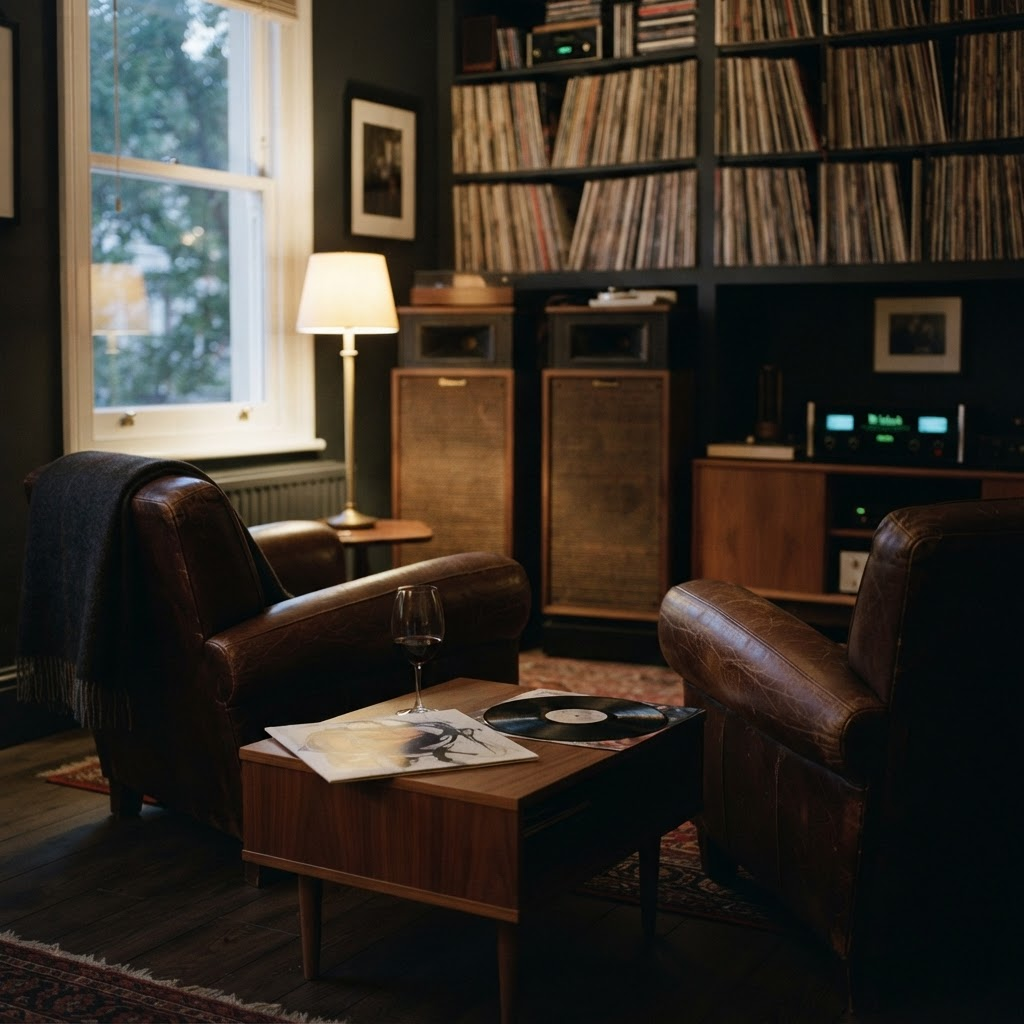
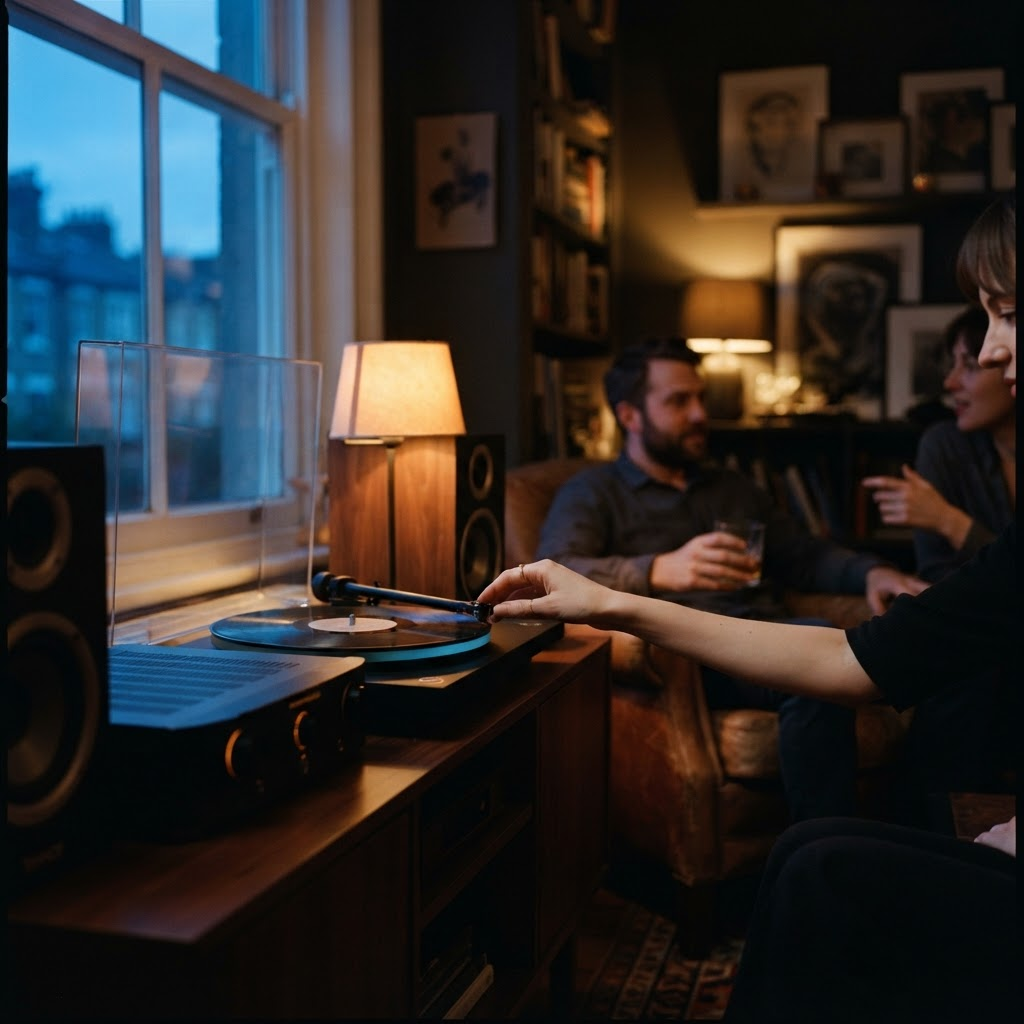
Listening Session
The Blue Hour
An evening session for the last light of the day — modal jazz and quiet soul, played as the room turns to dusk.
A quiet place given over entirely to the act of listening — to records played whole, in good company, without hurry or verdict.
Four convictions that shape every evening in the room.
A record asks for the whole of your attention, and returns it with interest. We play one album, from the top, and let it finish.
Where you sit, how the light falls, the hush before the needle drops — all of it is part of the music. We tend the room as carefully as the system.
We are not here to rate or to rank. We are here to notice. The best evenings end with more questions than they began with.
Music heard together is a different music. We listen side by side, say little while the record plays, and talk long after it stops.
Regular gatherings, each with its own character. All are welcome; none require a thing but attention.
An evening session for the last light of the day — modal jazz and quiet soul, played as the room turns to dusk.
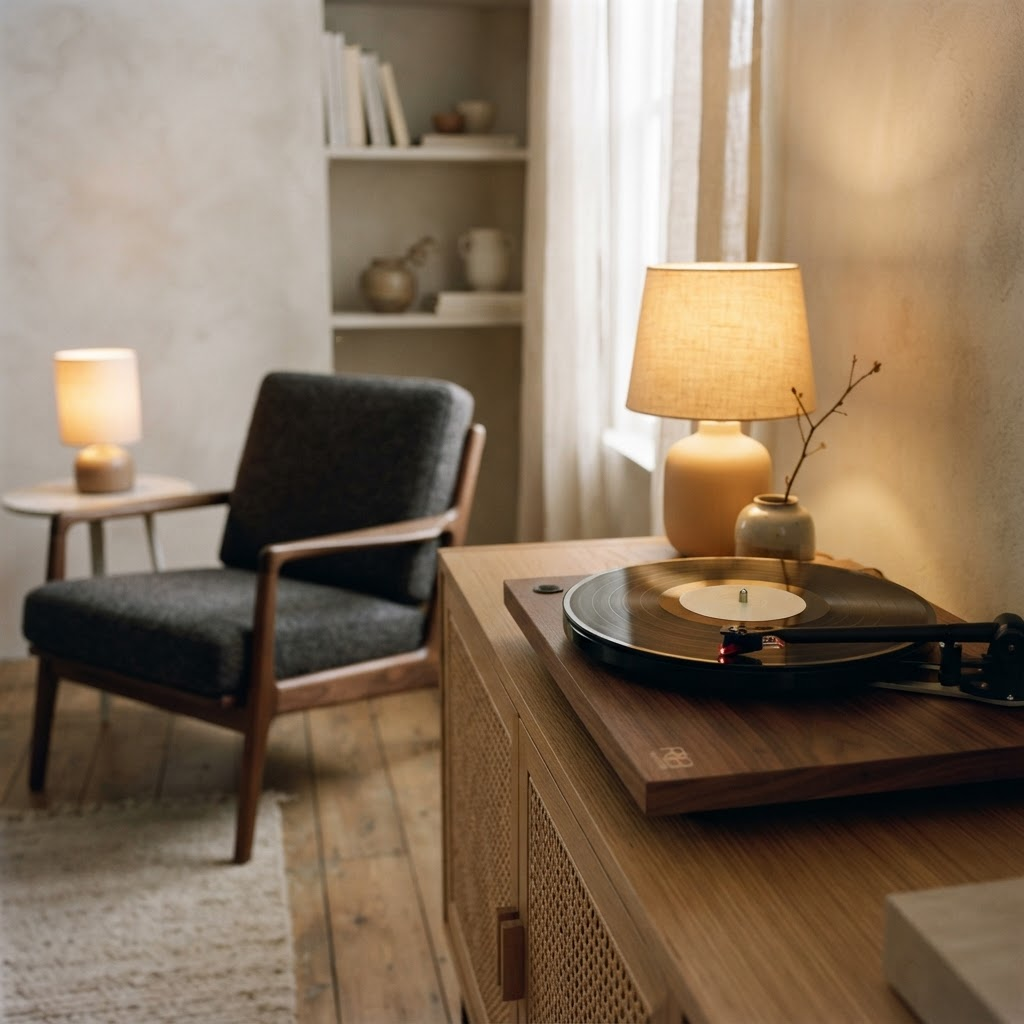
A session devoted to the long-form album side — a single unbroken movement, heard the way it was meant to be.
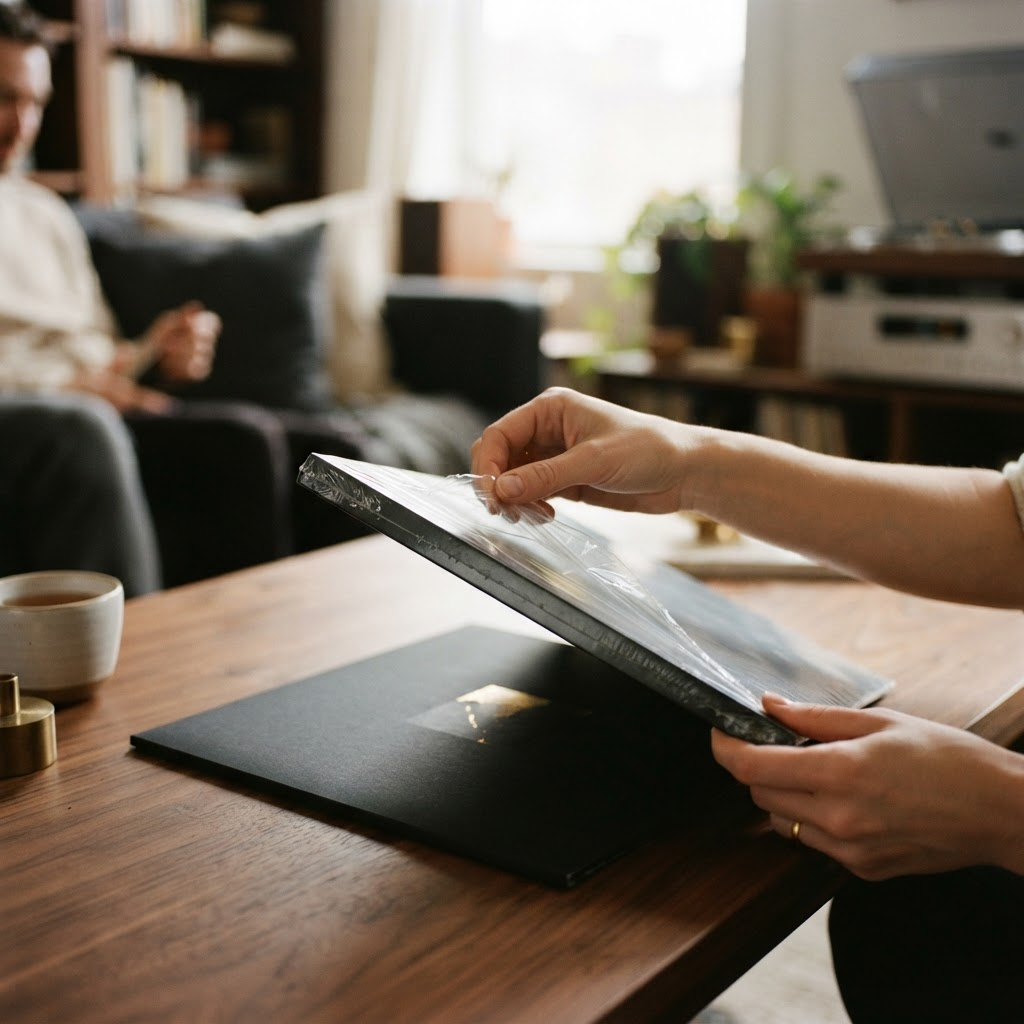
The shrink comes off a record none of us have heard, and we discover it together, in real time.
There is no single right system, only the one that tells the truth you want to hear.
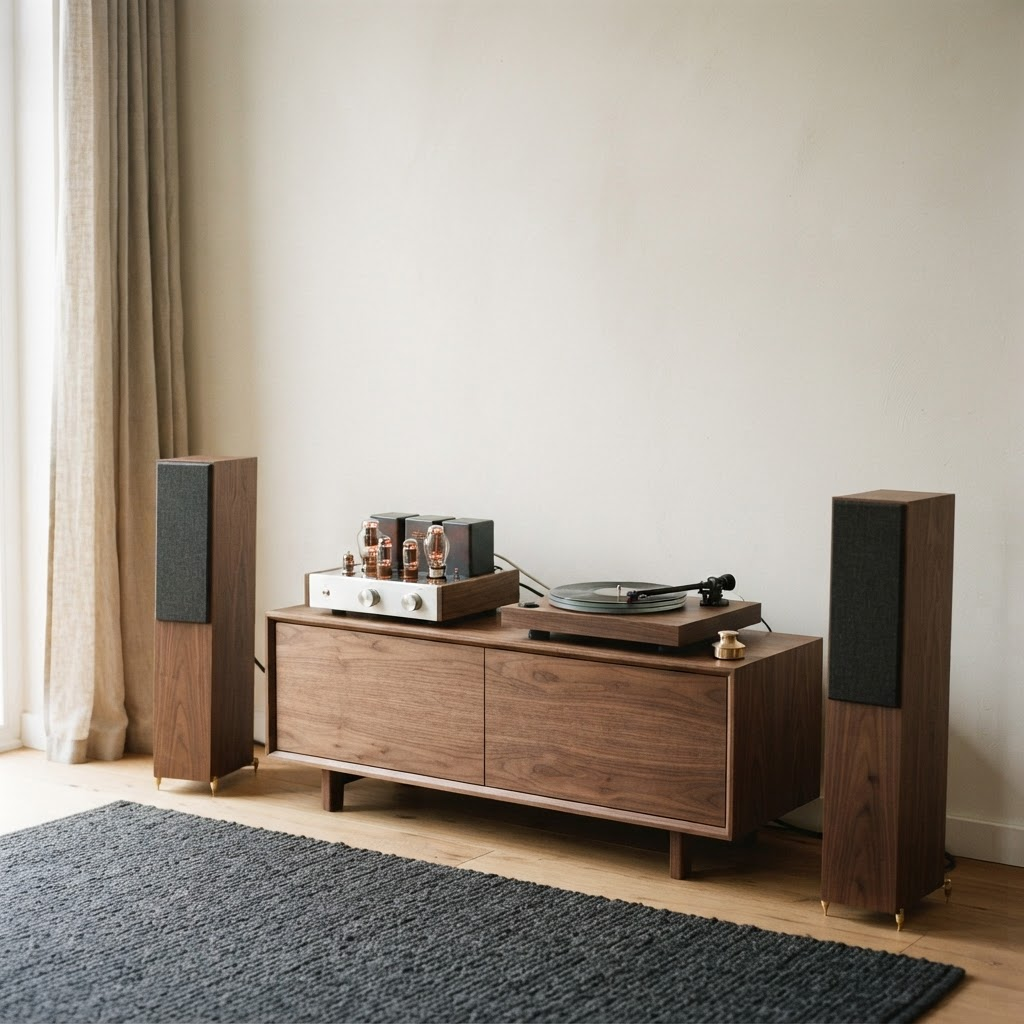
A single-ended triode, one source, one pair of speakers. Nothing between you and the recording that does not need to be there.
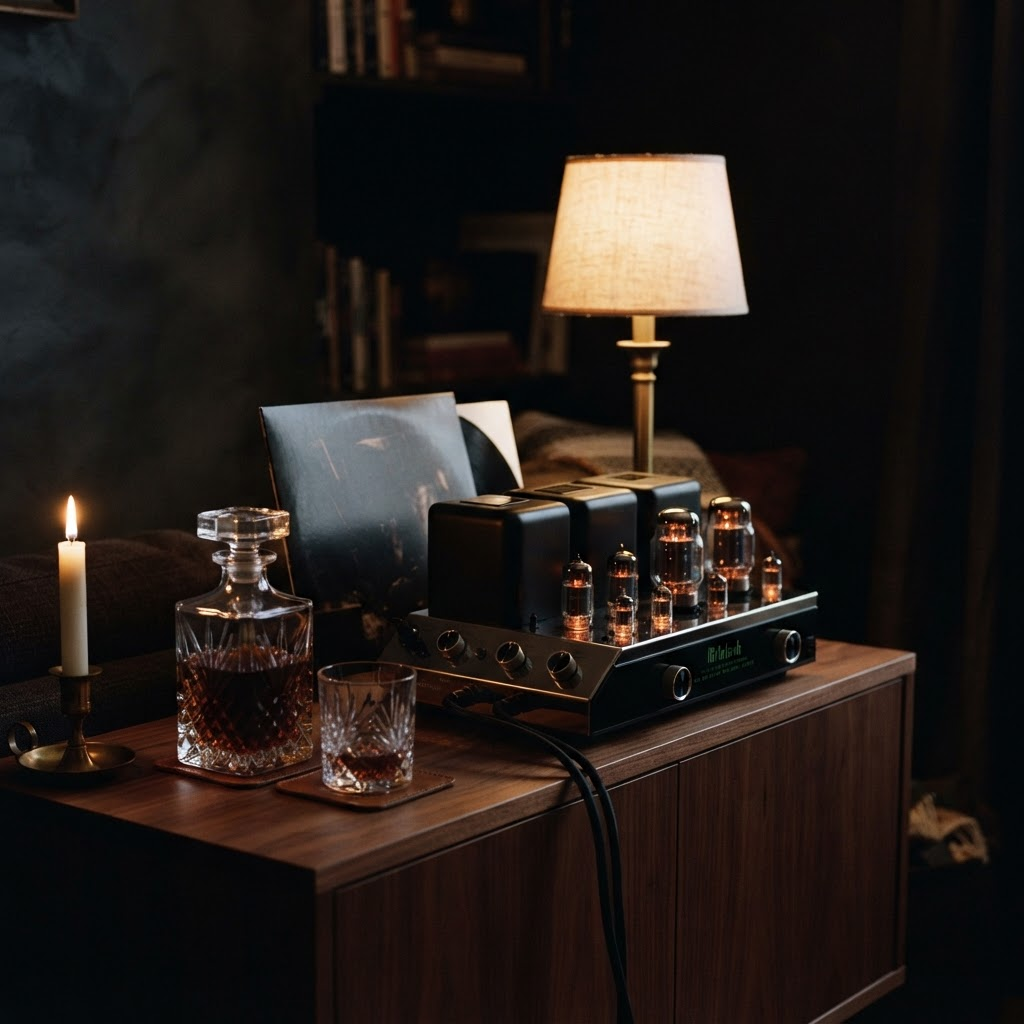
Glowing valves, a forgiving cartridge and speakers that flatter the music. A system built for feeling rather than analysis.
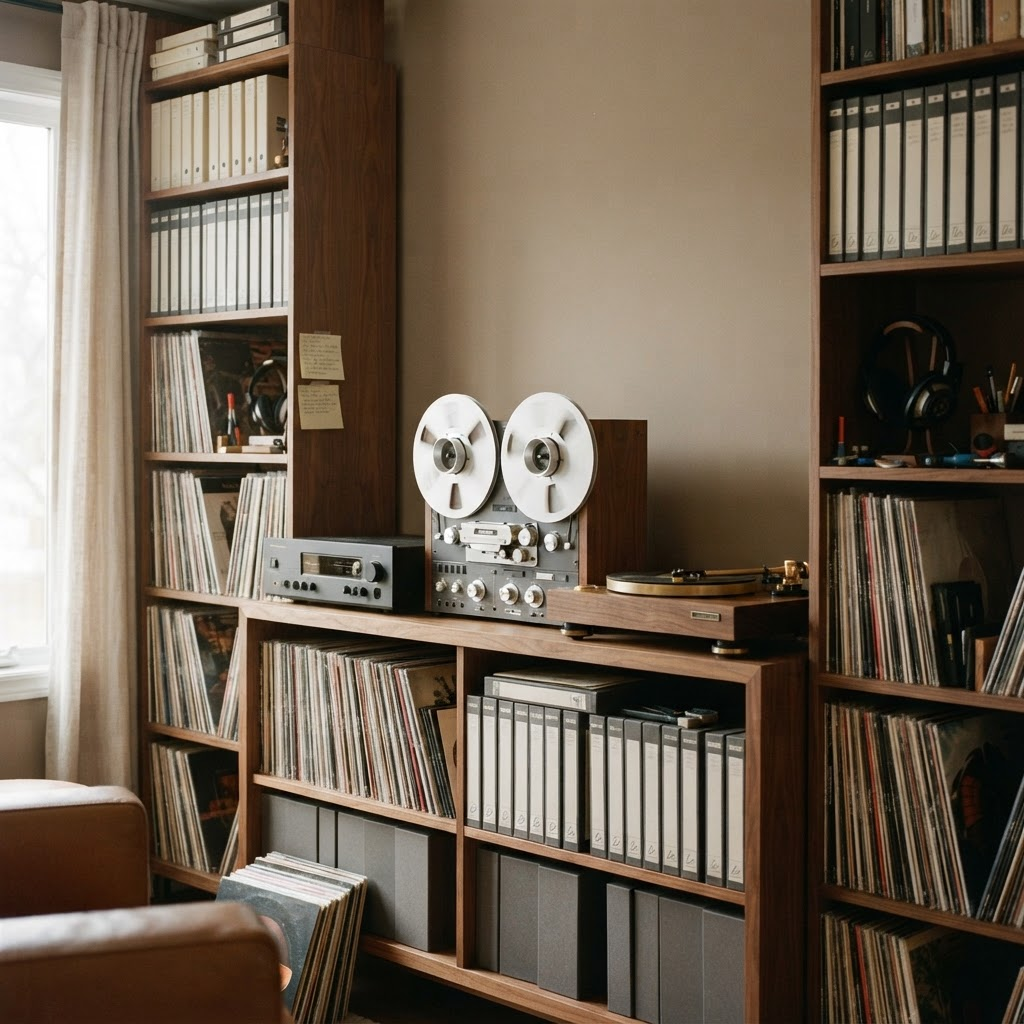
Built around a reel-to-reel and a reference cartridge, with everything measured and documented. Truth over flattery.
Portraits of listeners whose collections are a life's work, generously shared.

Four decades of jazz, shelved floor to ceiling in a Milanese apartment where every record has been played at least twice.
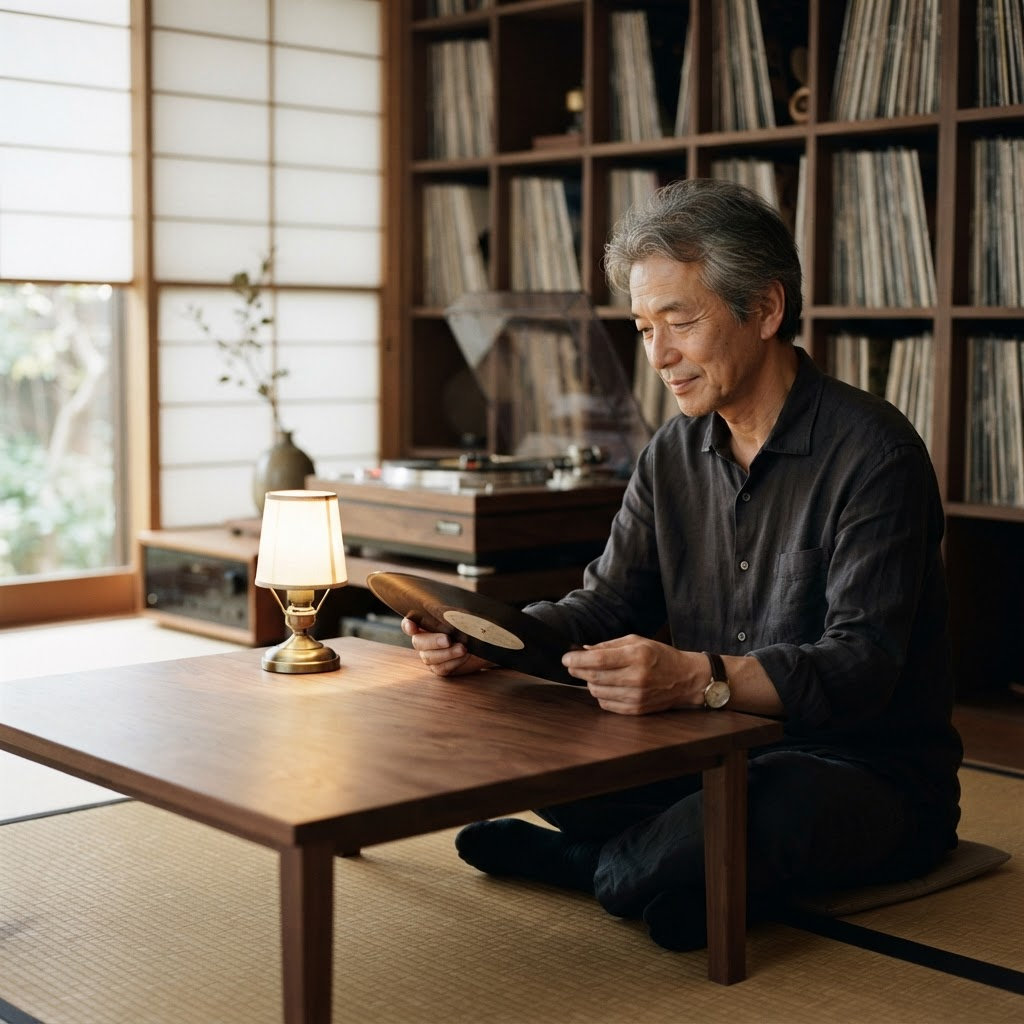
A pressing obsessive in Kyoto whose small, exacting collection prizes the perfect copy over the rare one.

A London crate-digger preserving West African highlife and afrobeat, one rescued pressing at a time.
Not a canon, just records the room keeps coming back to — and why.
Play it whole, in one sitting. It was built as a single prayer in four parts, and it only makes sense that way.
Picked by Marguerite VaughnFor the last hour of a long evening, when the room has gone soft and nobody wants to be the first to leave.
Picked by Elliot HearnA pressing worth chasing. On a system that can show you the layers, it rewards a lifetime of listening.
Picked by Hiroshi TanakaLoud, unhurried, relentless. Give it the volume it asks for and let the groove do its slow, insistent work.
Picked by Amara OseiThe sound of one person discovering the music as they play it. Best heard alone, late, with the lights low.
Picked by Priya AnandA record made of silence as much as sound. It teaches you to listen to the spaces between the notes.
Picked by Benedetta Ricci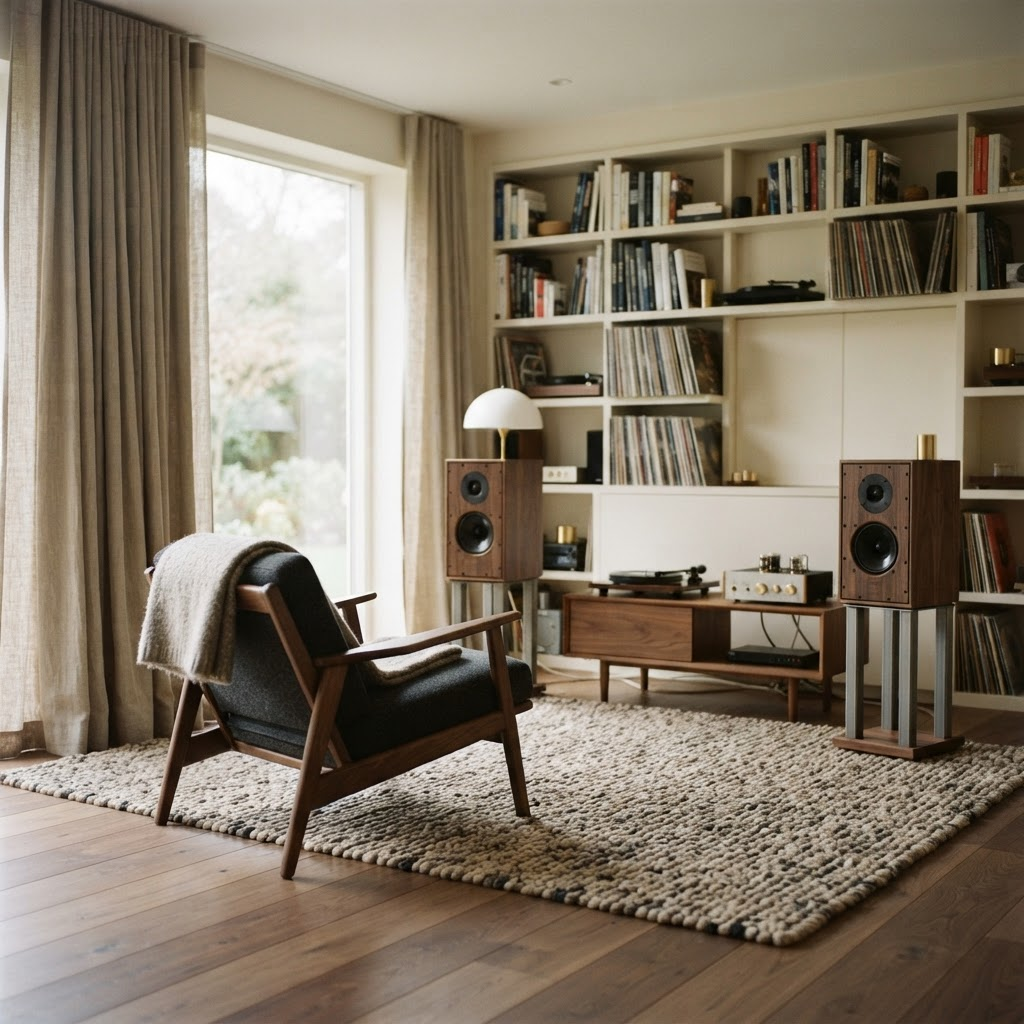
A great system in a poor room is a poor system. Before the equipment, there is the space — and the space can be tended with patience rather than money.
The room keeps a gentle rhythm through the year. Turn up to any of them.
Dusk listening — modal jazz and quiet soul as the room turns to evening.
One unbroken album side, heard in full silence, followed by long conversation.
A sealed record none of us have heard, discovered together in real time.
Regulars bring one record and three minutes on why it matters. Nobody is allowed to bring two.
Long talks with the people who make, sell and preserve the records we love.
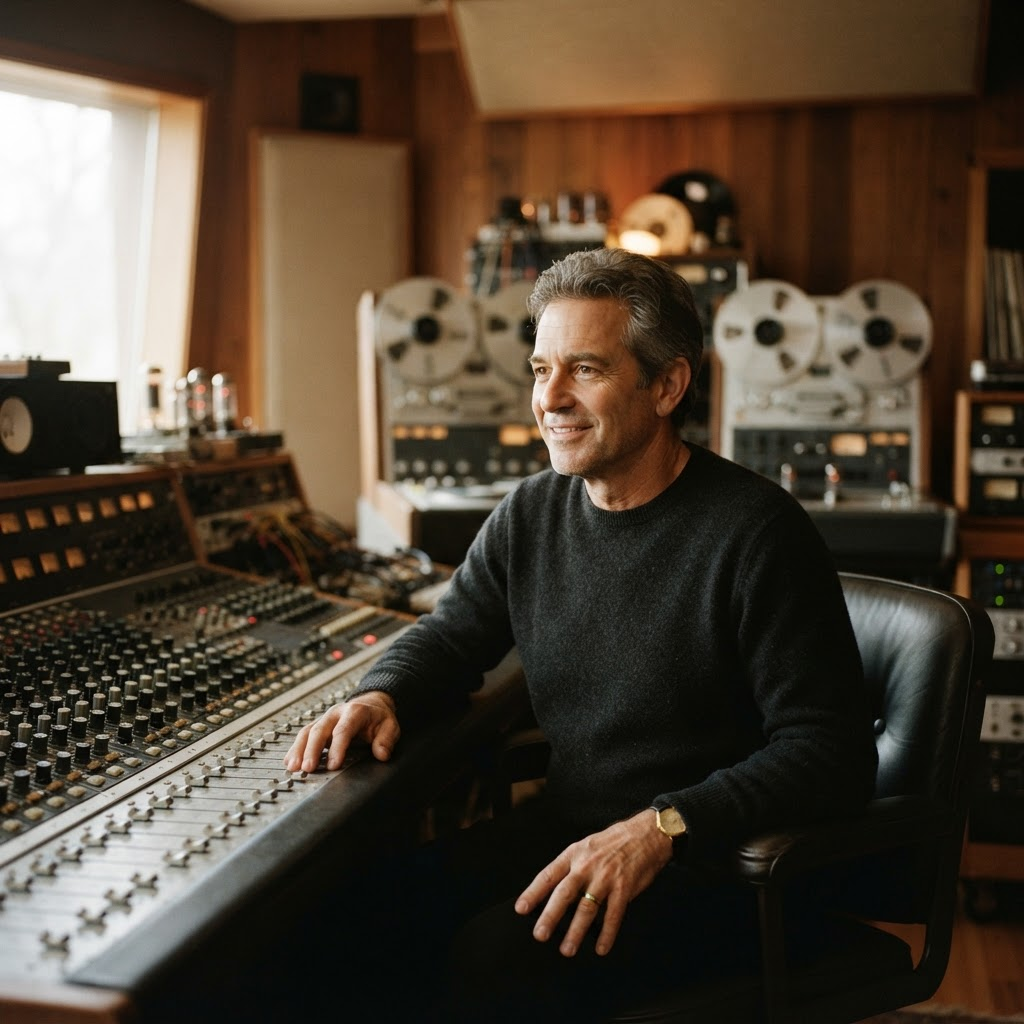
A lifetime spent deciding how records should sound — and why the best mastering is the kind you never notice.

Forty years behind the same counter, and a firm belief that a record shop is really in the business of time.
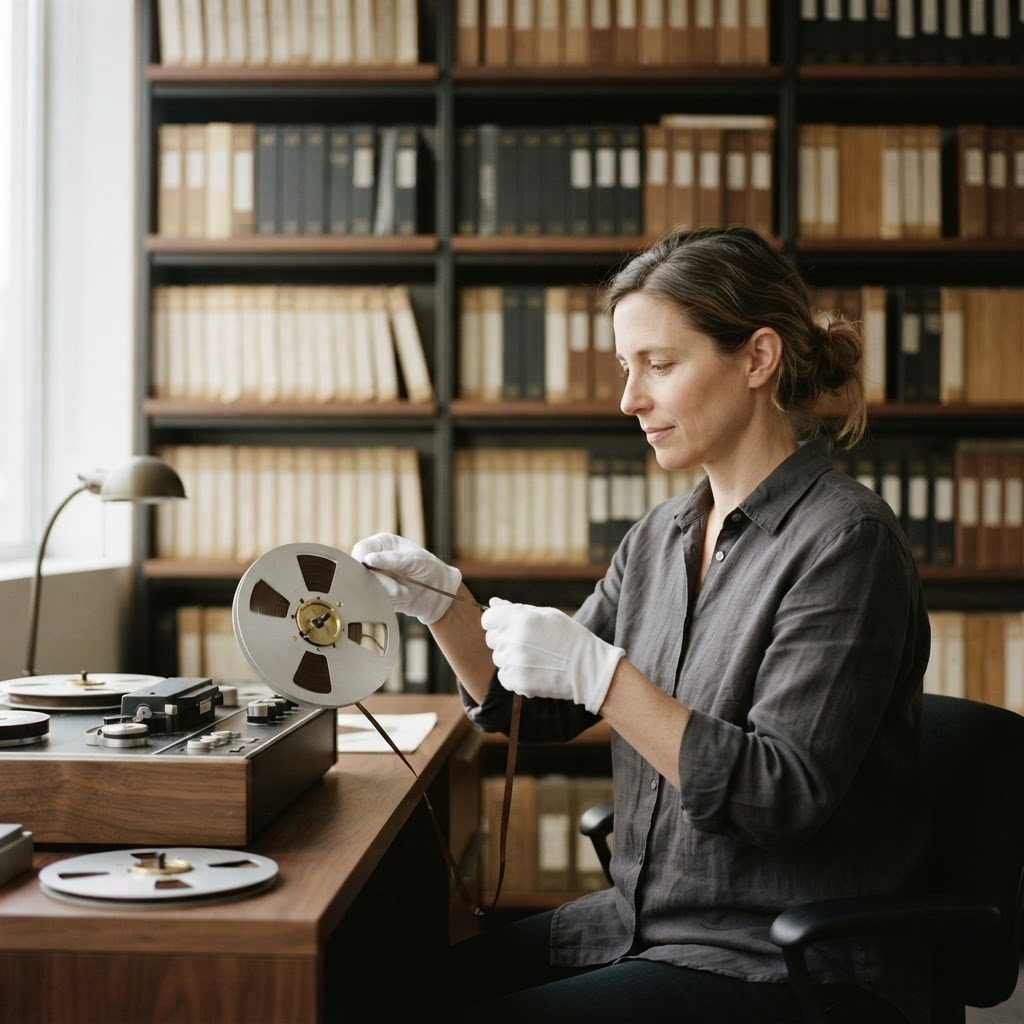
On the quiet, urgent work of keeping recordings alive long after the people who made them are gone.
The needle is about to drop. Whether you come for an evening or stay for years, the only thing the room asks is that you listen.
Join the next session